
The LUXURIA JournalDestinations & Discovery
The Season Between: Japan in Early Spring
Between the last snow of Hokkaido and the first full bloom in Kyoto lies a fortnight that rewards travelers who arrive with patience, good timing and a willingness to let the season lead.
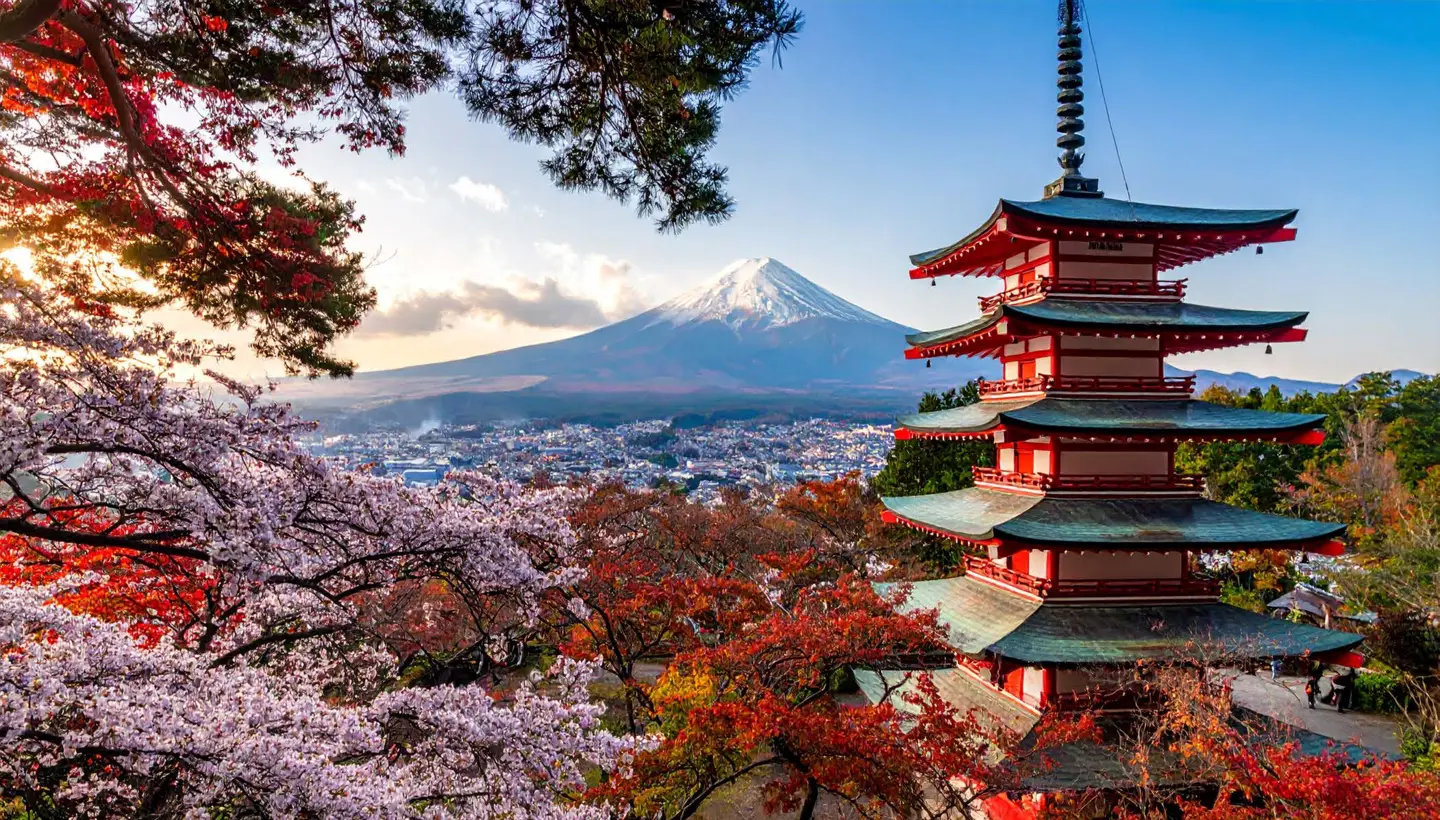
Mount Fuji in early spring, seen beyond a hillside pagoda.Photograph · LUXURIA Collection
There is a moment, usually somewhere in the final days of March, when Japan seems to hold its breath. The plum blossoms have come and gone. The mountains of the north still carry snow. And in the gardens of Kyoto and the parks of Tokyo, the cherry trees are on the very edge of opening. It is, for many who know the country well, the most beautiful fortnight of the year.
It is also, of course, the most sought-after. Which is precisely why the way one travels through these weeks matters as much as where one goes.
A bloom that moves
The Japanese cherry blossom, or sakura, does not arrive everywhere at once. It travels. Early varieties on the Izu Peninsula flower as soon as February; the familiar pale-pink somei-yoshino tends to reach Tokyo and Kyoto towards the end of March or the first days of April, before moving steadily north. Forecasts are published each year, and refined week by week as the season approaches.
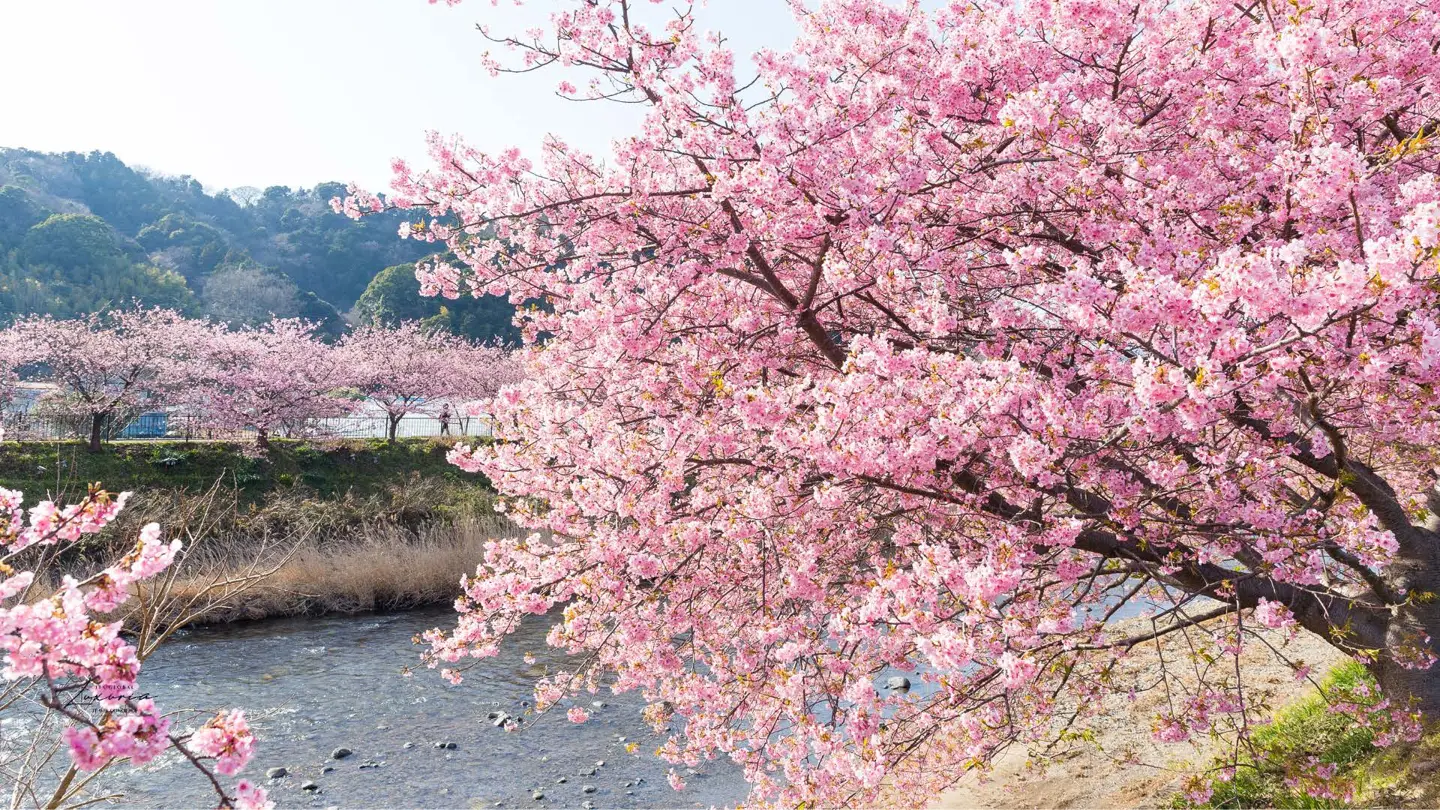
For the traveler, this has a quietly liberating consequence. Rather than chasing a single date, a well-composed itinerary can follow the season — arriving where the trees are opening, leaving before the crowds peak, and holding a day or two in reserve should the weather decide otherwise. The best spring journeys in Japan are designed with exactly that flexibility in mind.
The best spring journeys are not built around a single date. They are built to follow the season.
Kyoto, before the city wakes
Kyoto in bloom is extraordinary, and it is not a secret. The temples and gardens that appear in every photograph are rightly celebrated, and in high season they are busy from mid-morning onwards. The difference lies in the hours.
Arrive at a celebrated garden at first light, and the experience is transformed: raked gravel still damp, the light low and gold across the water, the only sound a temple broom somewhere out of sight. Where they exist, early or after-hours visits — and the knowledgeable guides who can explain what one is looking at — change a well-known site into something that feels personal.
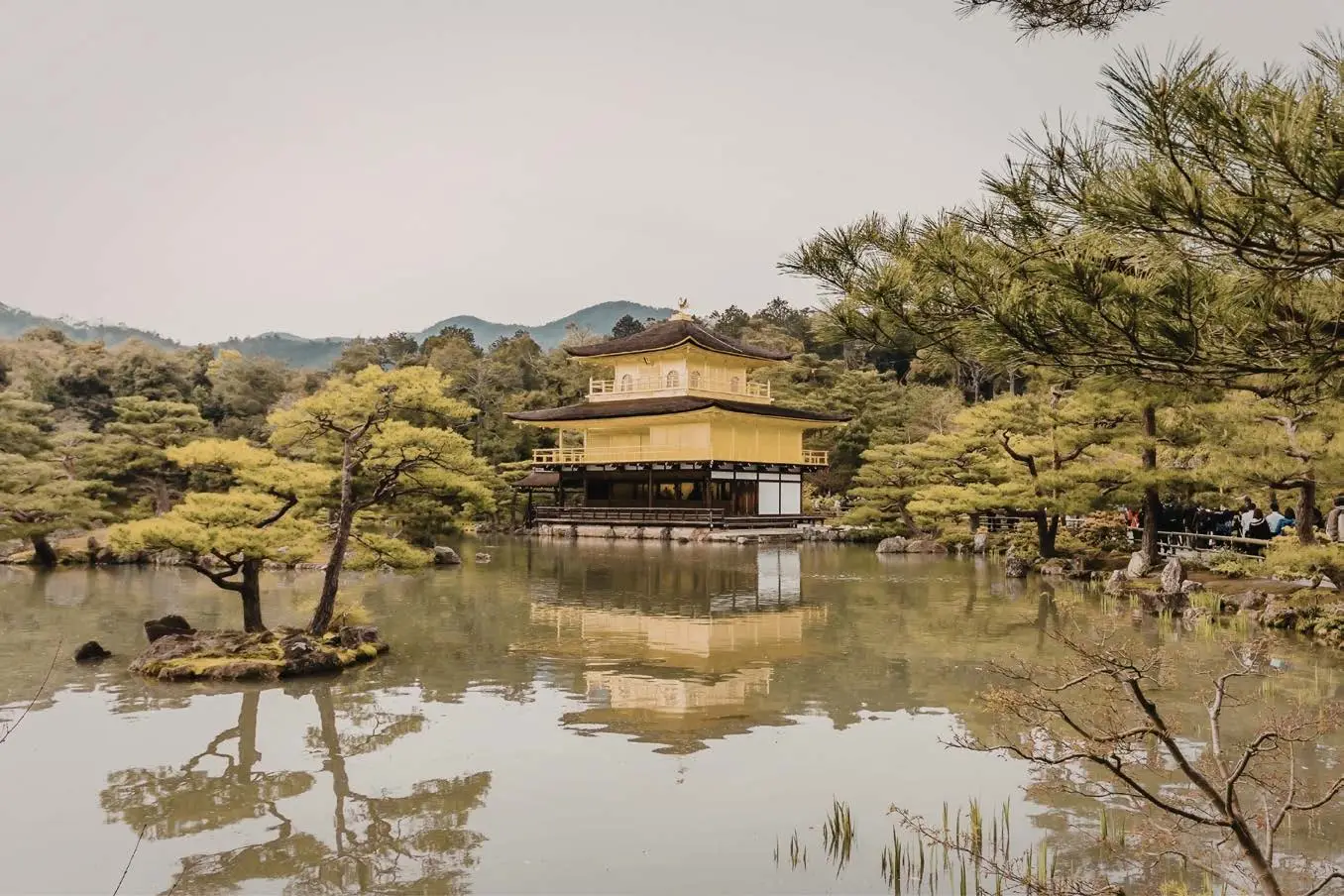
Beyond the temples, Kyoto rewards those who slow down: an afternoon with a craftsman in a family workshop, a tea ceremony conducted without hurry, a stroll along a canal lined with trees that the tour groups have passed by. None of it requires grand gestures. It requires time, and someone who knows where to look.
The pleasure of contrast
One of the great gifts of traveling Japan at this time of year is contrast. While the cities turn pink, the north can still be deep in winter. It is entirely possible to begin a journey in late-season snow — an onsen at dusk, steam rising into cold air — and end it beneath the blossom of Kyoto a week later.
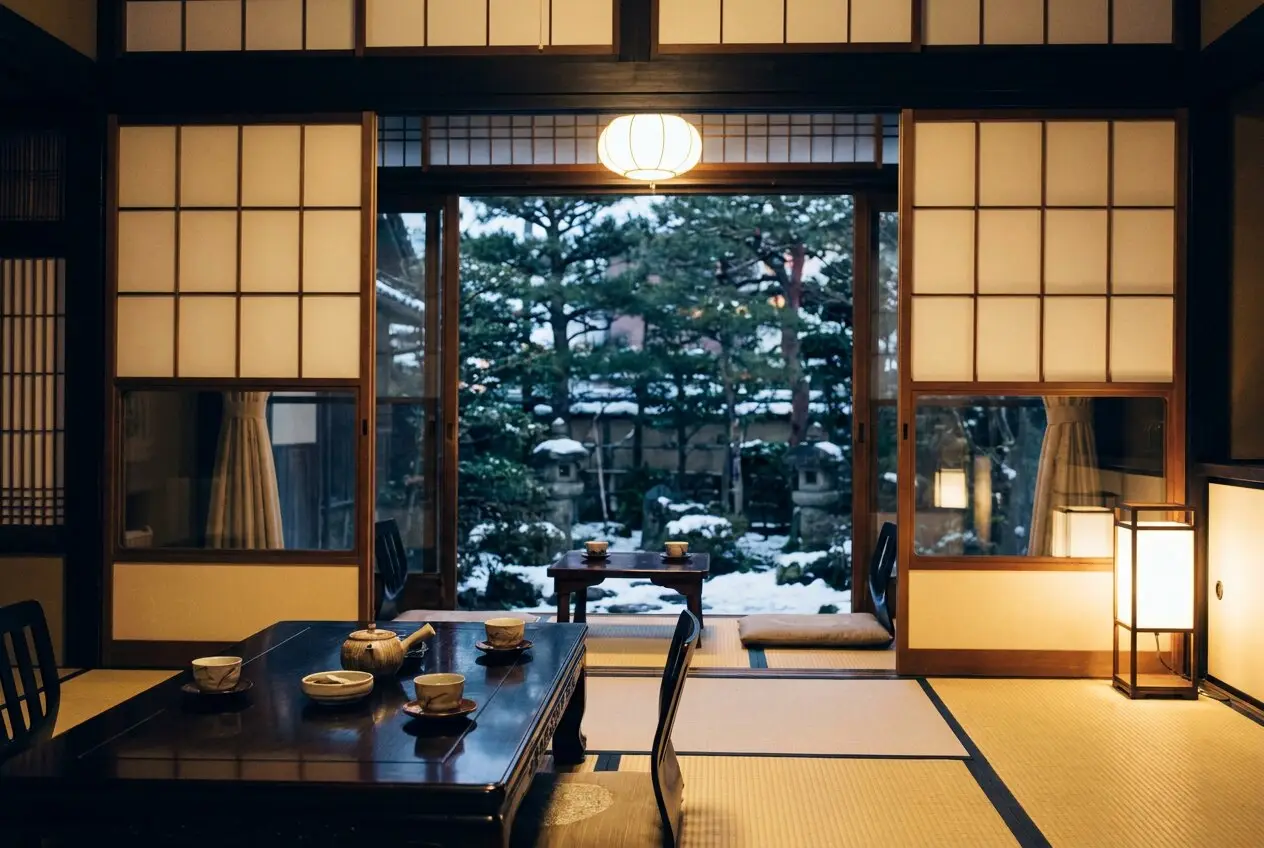
Between the two sits the ryokan: the traditional inn, with its tatami rooms, its multi-course kaiseki dinners composed around what is in season, and its sense of being looked after with great care and very little fuss. A night or two in a fine ryokan is not an interlude in a Japanese journey; for many travelers it becomes the heart of it.
Composing the fortnight
A considered early-spring itinerary tends to share a few principles:
- Flexibility around the bloom. Allow the days in Kyoto and Tokyo to move by a day or two as forecasts are refined.
- The right hours, not just the right places. Early and private access, where it can be arranged, matters more than the length of the list.
- Rest built in. A ryokan stay or a quiet day in the countryside restores the pace between cities.
- Contrast by design. Pairing the north and the south shows two seasons in a single journey.
Hotels and inns of character are reserved well in advance for these weeks, often many months ahead. The earlier the conversation begins, the more of the journey can be shaped by preference rather than availability.
LUXURIA is composing a private journey through Japan for the spring of 2027, from late March to mid-April, following precisely this arc from snow to blossom. Readers who would like to learn more can explore the proposed journey — or simply begin a conversation with us about a spring of their own design.
Continue reading
More from the Journal
The Art of Travel2 min read
The Art of the Unhurried Itinerary
Why the most memorable journeys are rarely the fullest — and how an itinerary with space in it becomes the true luxury.
By LUXURIA Editorial
Read the story
The World of Luxury1 min read
Time, Reconsidered: On Private Aviation
Private aviation is often described in terms of comfort. Its real value lies in the hours it returns to the journey.
By LUXURIA Editorial
Read the story